

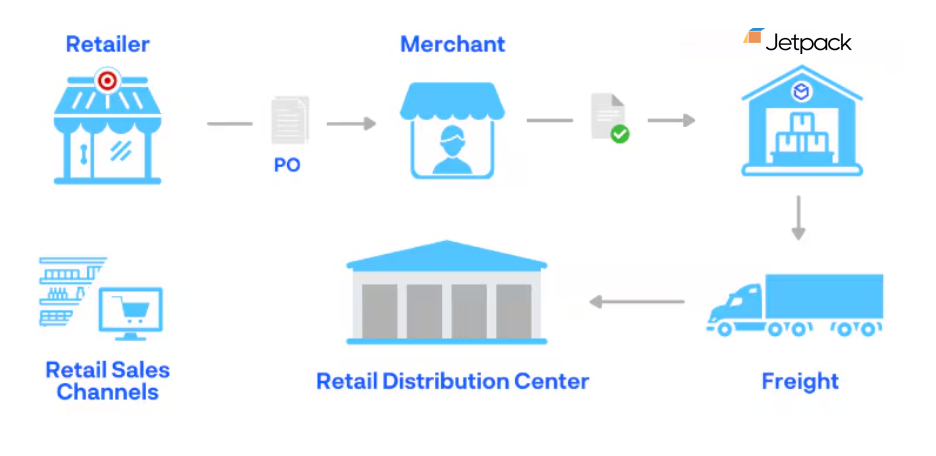
Retail distribution enables you to ship inventory from Jetpack fulfillment centers directly to large retailers like Target, Walmart, and other big box partners. These retailers then fulfill orders for their end customers or stock the inventory in physical storefronts, expanding your reach while Jetpack handles the complex compliance and logistics requirements.
Retail distribution is a specialized B2B fulfillment model where inventory flows from a third-party logistics provider (3PL) to large retailers rather than directly to end consumers. This approach allows you to leverage retail partnerships while Jetpack manages the operational complexities of retailer-specific compliance standards, specialized labeling, and documentation requirements.
Retail Distribution Overview
In a retail distribution model, Jetpack receives orders to ship your products to retailer warehouses. After receiving your inventory, retailers can use it in two primary ways:- E-commerce fulfillment - The retailer fulfills orders placed on their website (e.g., Target.com, Walmart.com)
- Physical store stocking - The retailer distributes inventory to brick-and-mortar locations for in-store purchase
Current Availability and Limitations
How Jetpack Supports Retail Distribution
Jetpack provides several integrated solutions to streamline your retail distribution operations:Understanding GS1 Labels for Retail Distribution
GS1 labels (also called GS128 labels) identify each shipping container—whether a box or pallet—within a retail distribution shipment. These labels are essential for retailer compliance and tracking. GS1 Label Requirements: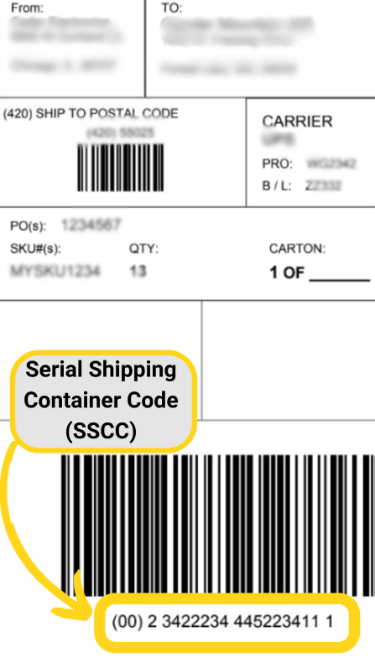
Getting Started with Retail Distribution
Retail distribution is exclusively available to merchants who meet certain eligibility criteria. This specialized service requires additional setup and configuration to ensure compliance with retailer-specific requirements. To learn more about retail distribution:- Pricing and Enablement: Contact your Jetpack Care Manager to discuss pricing, eligibility requirements, and the enablement process.
- Approved Retailers: Review the list of approved retailers that Jetpack currently supports.
- Dropshipping: If you’re interested in retail dropshipping arrangements, see Retail Dropshipping for details.
Let’s Dive Deeper
Our Approach to B2B
Back to the main B2B fulfillment guide
Retail Dropshipping
Fulfill dropship orders for retail partners
Approved Retailers
View supported retail partnerships
Creating Manual B2B Orders
Create wholesale and B2B orders in the dashboard
Integrating Your Store
Set up EDI and other integrations
B2B Turnaround Times
Review SLAs for B2B and retail orders

Questions? Contact Jetpack Care.
If you have questions about retail distribution eligibility, retailer compliance requirements, or GS1 labeling, contact Jetpack Care for assistance. Our team is here to help via Slack, phone, or email!